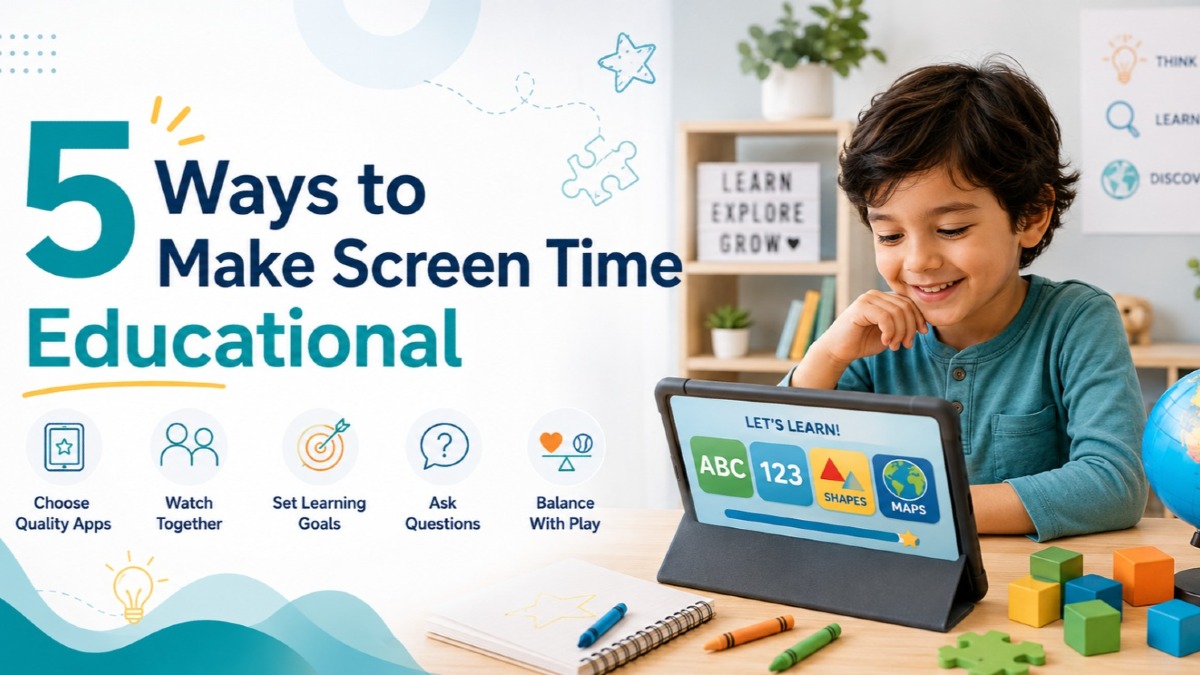
Screen Time Isn't the Enemy
Parents often worry about screen time, and for good reason. Hours of passive scrolling or mindless gaming can be harmful. But the problem isn't screens themselves — it's how they're used.
When used intentionally, devices become powerful learning tools. Here's how to make the shift.
1. Choose Interactive Over Passive
Not all apps are created equal. Look for apps that require active participation: solving puzzles, answering questions, building things, or exploring content. AR apps like the Eduarise companion app let kids physically move around and interact with 3D content — the opposite of passive consumption.
2. Set Learning Goals, Not Just Time Limits
Instead of saying "30 minutes of screen time," try "Explore 3 new countries on the AR map today." Goal-oriented screen time feels purposeful and gives kids a sense of achievement.
3. Co-Play with Your Child
Sit with your child and explore together. Ask questions, discuss what they find, and share your own knowledge. Co-learning amplifies the educational benefit by 2-3x compared to solo screen time.
4. Connect Digital to Physical
The best educational screen time bridges to the real world. After exploring a country in AR, find it on a globe. Cook a dish from that country. Learn a greeting in their language. This multimodal approach deepens understanding.
5. Review and Reflect
At the end of the day, ask your child to teach you what they learned. Teaching is the highest form of learning — if they can explain it, they truly understand it.
The Bottom Line
Screen time becomes valuable when it's active, goal-oriented, shared, connected to real life, and reflected upon. The right tools make this easy. The wrong ones make it a babysitter.
Choose wisely.