Elementary school is a time of massive cognitive growth. Children are transitioning from simple play to complex, abstract thinking. They want to understand how things work—from the water cycle and weather patterns to gravity and global geography. To help kids grasp these complex subjects, many
Elementary school is a time of massive cognitive growth. Children are transitioning from simple play to complex, abstract thinking. They want to understand how things work—from the water cycle and weather patterns to gravity and global geography.
To help kids grasp these complex subjects, many parents and teachers are turning to modern learning tools. In this guide, we explore the **best augmented reality educational toys** that make learning active, screen-friendly, and highly visual. These tools combine physical play with digital 3D models to keep kids fully engaged.
It overlays digital 3D animations, sounds, and interactive quizzes onto physical items like printed sheets, cards, or globes. According to early learning frameworks by the National Association for the Education of Young Children (NAEYC), high-quality digital play should support active, minds-on learning and social interaction rather than passive screen time. AR toys do exactly that by turning a screen into an active portal of discovery rather than a passive viewing machine.
The Best Augmented Reality Educational Toys for Kids
Here are our top recommendations for AR-powered toys that are perfect for kids in kindergarten through fifth grade.
1. Eduarise AR World Map (Best for Geography & Cultural Studies)
If you are looking for an affordable, clutter-free way to teach geography, the Eduarise AR World Map is the clear winner.
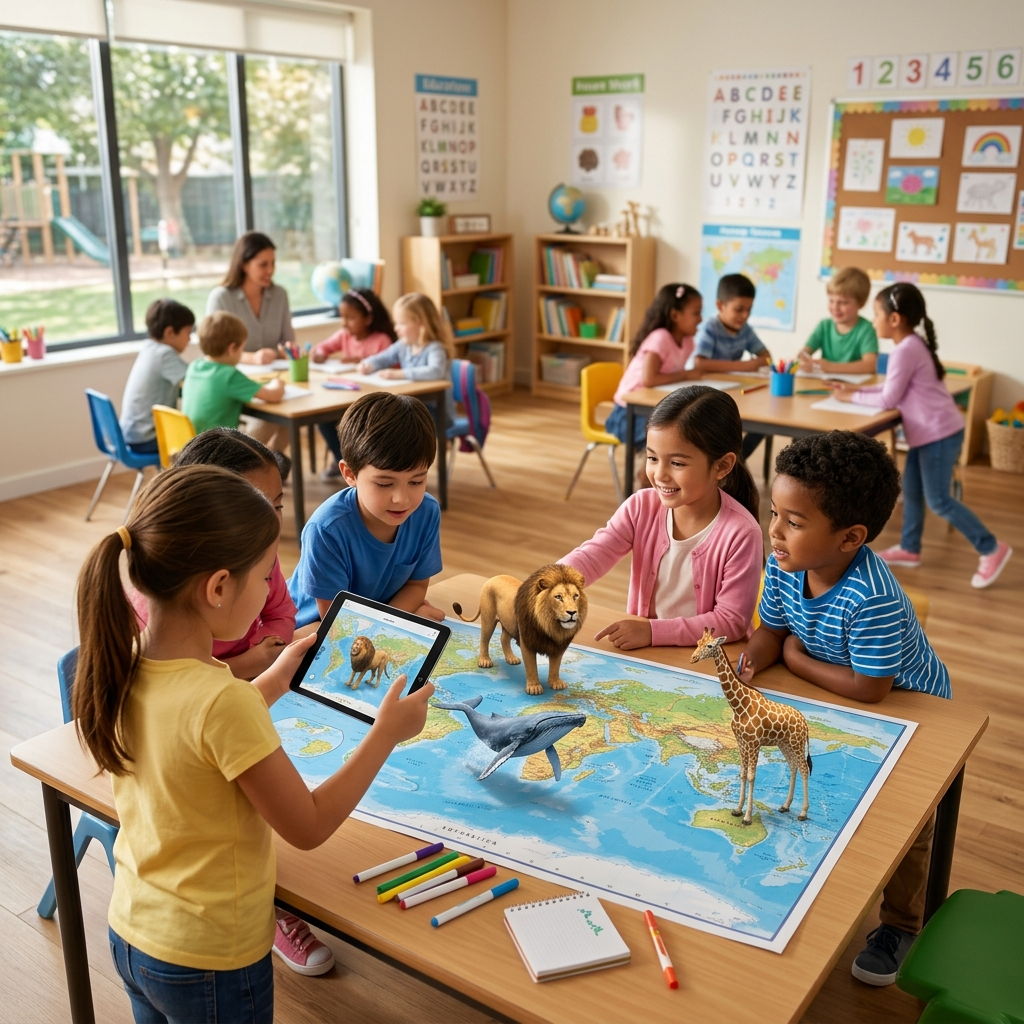
Instead of a bulky plastic toy, this is a digital download that you purchase once for $14.99 and print at home or at a local print shop. Once printed, kids scan the map using the free Eduarise app on an iPad or tablet.
Immediately, the flat map comes to life on the screen. Detailed 3D animals, historically accurate national monuments, flag trivia, and national anthems appear exactly where they belong in the world. Tapping on the 3D objects plays real-world sounds and reads fun facts aloud.
Why elementary students love it:
Trivia Quizzes: The app includes game modes where kids are challenged to locate landmarks under a timer, turning study sessions into a fun trivia match.
Auditory Learning: Hearing national anthems and animal sounds helps kids associate facts with locations, which improves memory retention.
Portability: You can roll it up and take it with you, making it an excellent travel companion for road trips or flights.
If you prefer a physical globe on your child’s desk, the PlayShifu Orboot Earth is a high-quality smart globe. It features no text or labels on the physical sphere itself. Instead, the globe is covered in visual markers that the tablet camera scans to project animals, weather patterns, and cultures on the screen.
While it is more expensive than printable maps (retailing around $50), it is a great choice for parents who want a classic, three-dimensional globe on display.
Why elementary students love it:
Story-Based Play: The companion app features interactive storylines where kids help characters solve global mysteries.
Tactile Spin: Kids can physically rotate the sphere to find markers, mimicking real globe exploration.
3. Shifu Plugo Link (Best for Space & Engineering Logic)
For kids who love to build with their hands, Plugo Link by PlayShifu is a magnetic building block set that interacts with a tablet. Kids place a foldable gamepad on a table and use physical hexagon blocks to construct shapes that match the challenges shown on the screen.
The camera tracks the blocks in real-time, helping children solve math, engineering, and logic puzzles.
Why elementary students love it:
Immediate Feedback: If a structure is built incorrectly, the on-screen game character guides the child to fix it.
Creative Engineering: It bridges the gap between digital puzzles and physical block building.
4. MERGE Cube (Best for Science and Anatomy Study)
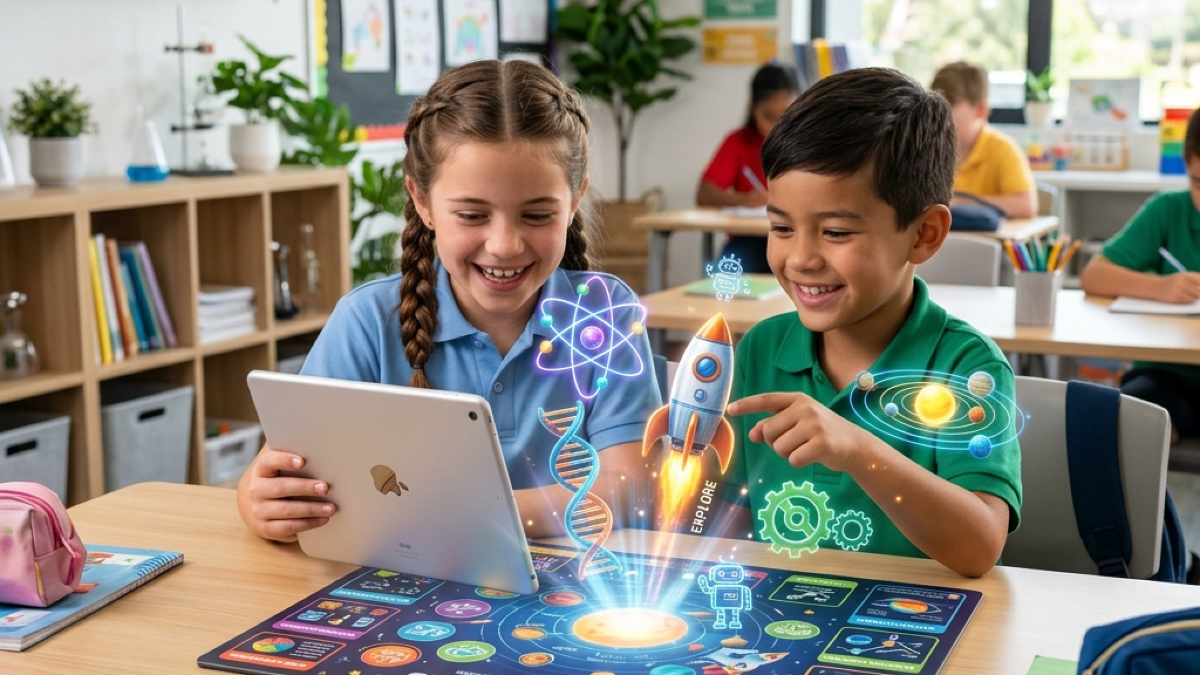
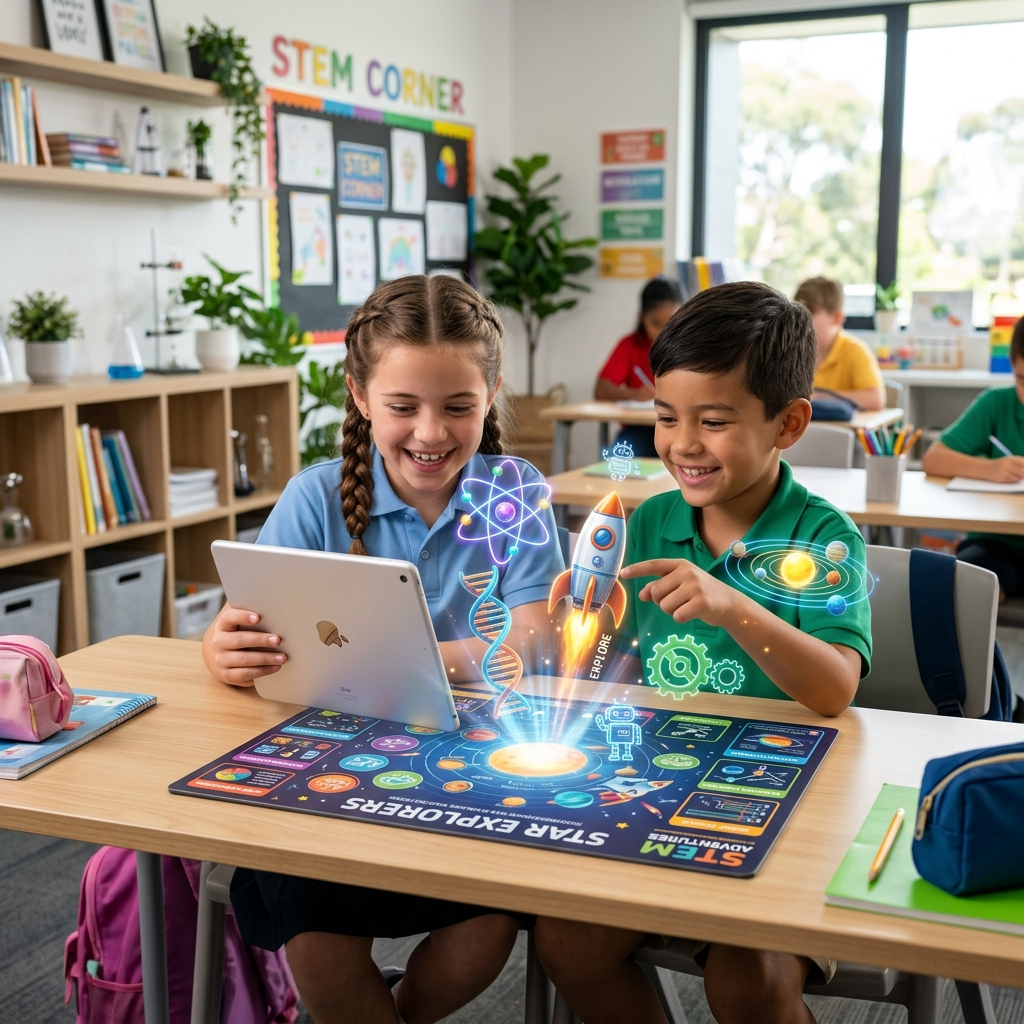
The MERGE Cube is a physical foam cube covered in unique visual patterns. When scanned with a smartphone or tablet app, the cube transforms on the screen into a wide variety of 3D objects that kids can hold in the palm of their hand.
A child can turn the cube to inspect a 3D model of the human heart, look at a holographic solar system, or examine geological layers of the Earth. It is a highly popular tool in STEM classrooms due to its versatility.
Why elementary students love it:
Hands-on Interaction: Holding and rotating the cube feels like holding a real object in your hand.
Broad Lesson Scope: The software has apps covering space, dinosaur fossils, cells, and geometry.
Whether you are homeschooling or teaching in a public school classroom, integrating augmented reality into your daily lessons is easy when you follow a few simple strategies.
1. Plan Around Weekly Themes
Instead of letting kids scan objects randomly, set a specific weekly theme. For example, if you are studying marine biology, have your child find all the ocean animals on the Eduarise AR Map and write down three facts about each. If you are learning about ancient Egypt, have them inspect the Giza Pyramids in 3D using the app's monument pins.
2. Encourage Collaborative Play
Augmented reality is great for team activities. Have one child hold the tablet while another child searches for physical pins on the printed map. This builds teamwork, communication, and visual coordination skills.
3. Turn Abstract Concepts Into Concrete Models
Many science topics are hard for elementary students to visualize. For instance, explaining the orbit of planets is difficult using a flat textbook page. Scanning a MERGE Cube or looking at a 3D solar system allows kids to walk around the virtual model, seeing the relative sizes and movements of planets with their own eyes.
PlayShifu vs. Eduarise: Which Toy is Best for Your Budget?
When choosing the best augmented reality educational toys for your family or classroom, cost and footprint are two critical factors to consider.
The Physical Route: Products like PlayShifu Orboot and Plugo Link are highly tactile and great for individual play. However, they are expensive ($50+ per kit) and require shelf space to store the physical gamepad, globe, and parts. If critical plastic pieces are lost, the games cannot be played.
The Digital-First Route: Eduarise AR World Map is a printable PDF file that costs $14.99. It has a zero-clutter footprint because you can roll it up or fold it away. Because you own the digital file, you can print fresh copies whenever the original gets damaged.
For homeschooling families and school classrooms, the digital-first model is incredibly practical. Instead of buying multiple expensive globes, a teacher can print copies of the Eduarise map for every single desk, giving every child their own personal AR study portal.
Verdict: Sparking Curiosity in 2026
Augmented reality is a fantastic way to turn screen time into an active, hands-on learning experience.
If you want focused, physical building blocks, kits like Plugo Link are excellent choices. But if you want a budget-friendly, clutter-free geography and world culture tool that multiple children can use simultaneously, the Eduarise AR World Map is the best value option on the market.