If you are a parent trying to find the perfect geography toy for your child, you have likely come across Augmented Reality (AR) educational toys. Two of the most popular options on the market right now are the Eduarise AR World Map and the PlayShifu Orboot smart globe.
Both of these interactive learning toys use AR technology to bring geography, animals, and world landmarks to life through an iPad or smartphone. However, they take entirely different approaches to how your child interacts with them, how much they cost, and how they are delivered.
In this comprehensive guide, we will compare Eduarise vs. PlayShifu Orboot to help you decide which AR map is best for your child's learning style (and your wallet).
Why Augmented Reality is the Future of Geography
Gone are the days of memorizing capital cities from a dusty, outdated textbook. According to educational research on visual learning (which highlights the cognitive benefits of multi-sensory learning), children retain information much faster when they can interact with it in three dimensions.
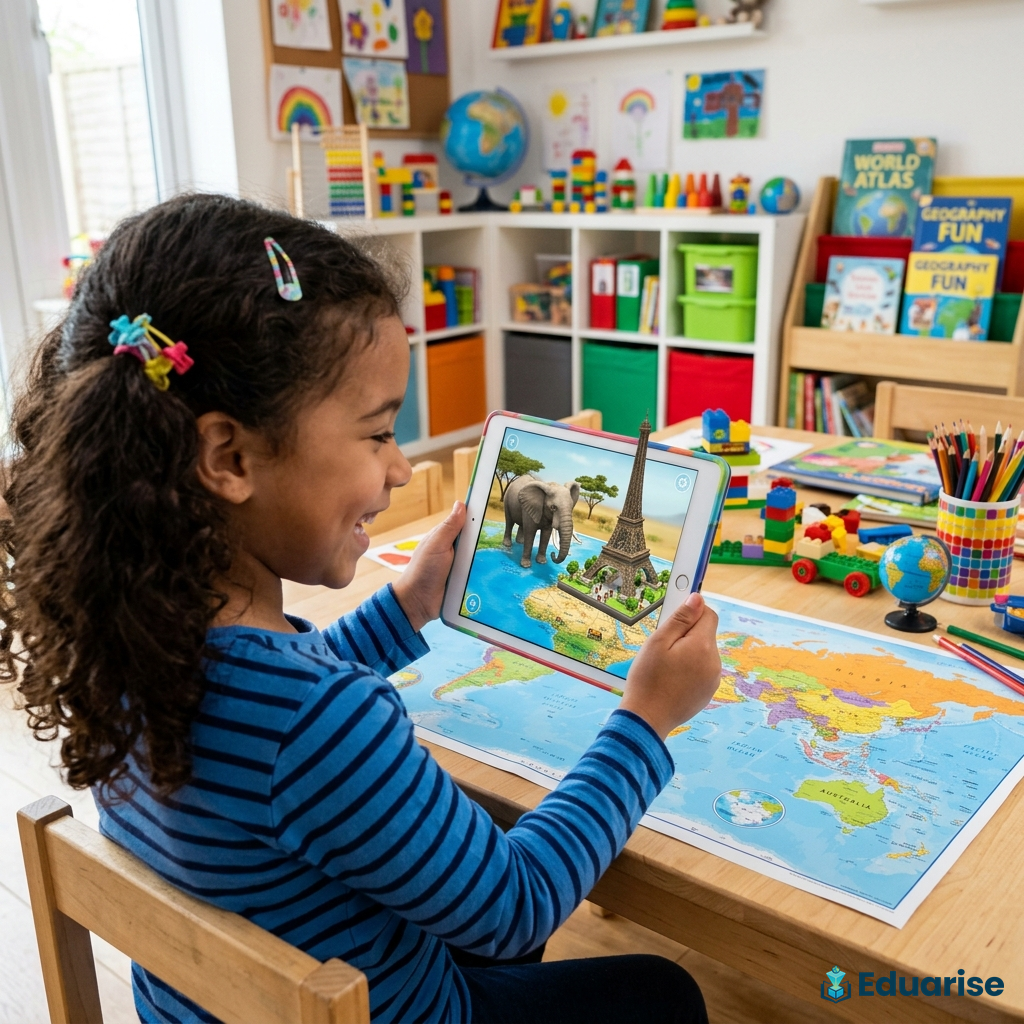
AR technology bridges the gap between physical and digital play. Instead of just swiping on a screen, kids use a physical object—like a printed map or a globe—and scan it with a device to see 3D models of elephants, the Eiffel Tower, or the Amazon Rainforest pop out into their living room.
But when it comes down to choosing the right tool, should you buy a bulky physical globe, or is a printable digital map the better option? Let's break it down.
PlayShifu Orboot: The Traditional Smart Globe
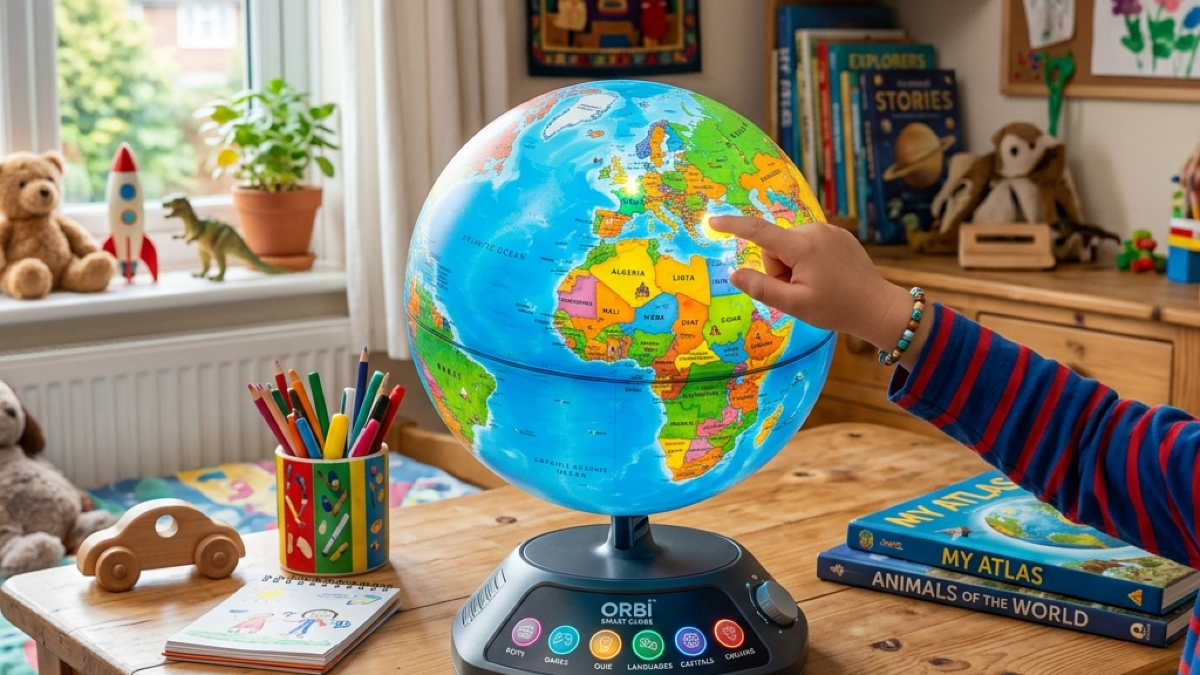
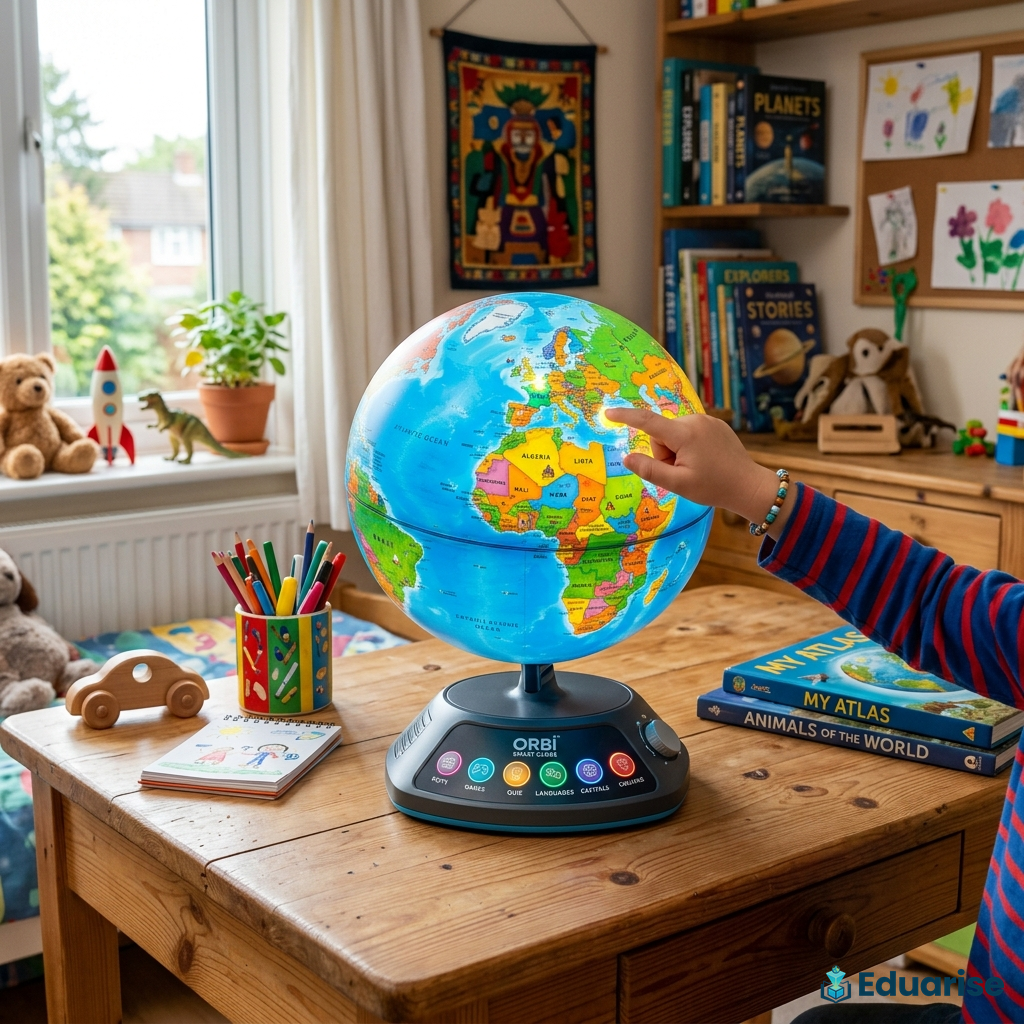
The PlayShifu Orboot is a popular interactive smart globe. It comes as a physical, 10-inch globe that ships to your house in a large box. The globe itself has no names or borders printed on it; instead, it is covered in small icons (like stars and animals). Kids use the Orboot app to scan the globe and unlock facts.
The Pros of PlayShifu Orboot
- Tactile Experience: Kids physically spin the globe, which helps develop fine motor skills.
- Guided Gameplay: The app includes several games, quizzes, and a passport feature to keep kids engaged.
- No Printing Required: Because it ships as a physical product, there is no setup required other than downloading the app.
The Cons of PlayShifu Orboot
- High Price Tag: Retailing at around $50 to $60, it is a significant investment for a single toy.
- Bulky Storage: A 10-inch globe takes up a lot of space in a playroom or classroom.
- Shipping Delays: You have to wait for the product to arrive via mail, which isn't ideal for last-minute gifts or immediate lesson plans.
Eduarise AR World Map: The Printable Digital Alternative
The Eduarise AR World Map takes a modern, highly accessible approach to interactive learning. Instead of shipping a bulky piece of plastic across the country, Eduarise provides the map as a high-quality digital download.
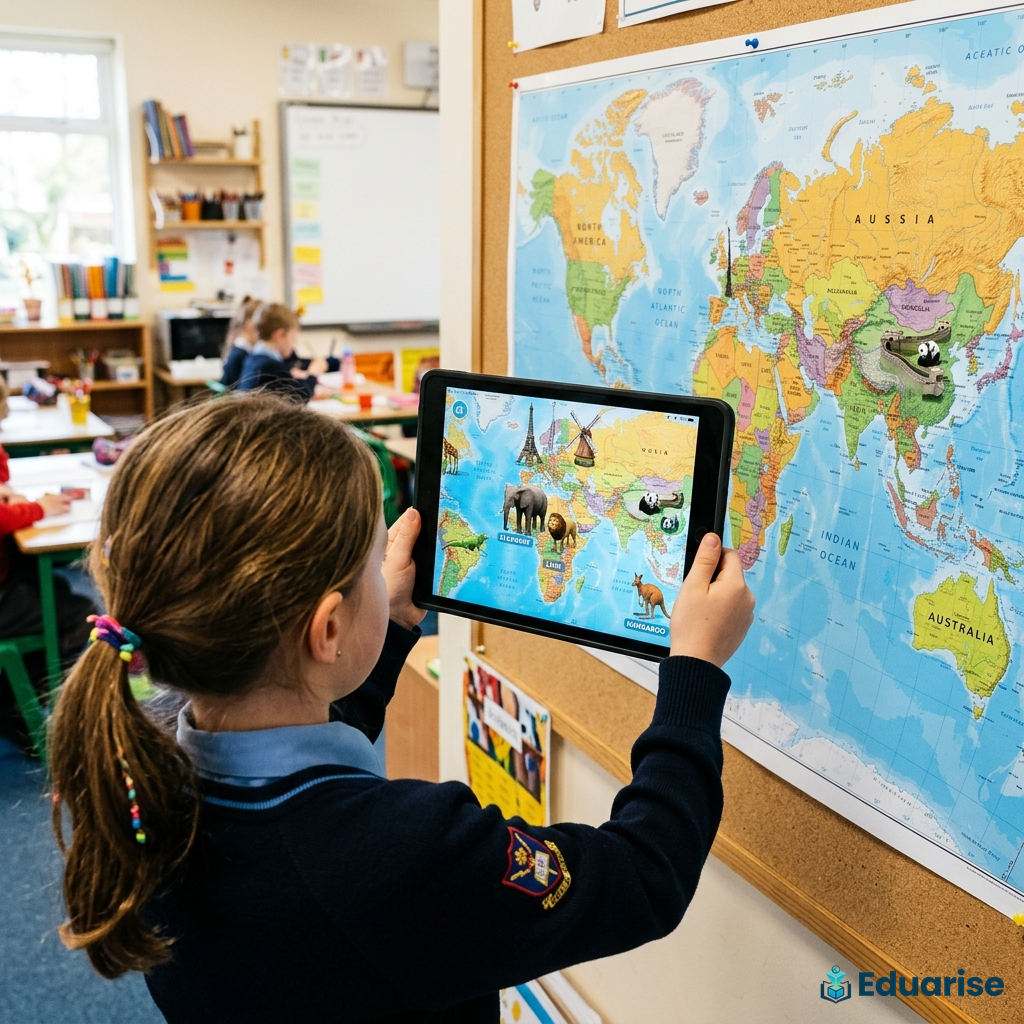
Parents simply print the map at home (on standard A4 paper or larger), lay it on a table or stick it to a wall, and let their kids scan it with the free Eduarise app.
The Pros of Eduarise
- Instant Access: Because it is a digital product, there is zero shipping time. You can buy it, print it, and start learning in 5 minutes.
- Highly Affordable: At just $14.99 (originally $24.99), it is a fraction of the cost of physical smart globes.
- Space-Saving: A printed map can be folded away in a drawer, pinned to a bulletin board, or stuck to the fridge. It requires zero storage space.
- Print Multiple Copies: If you have three kids or a classroom full of students, you can print a map for everyone without buying multiple $50 globes.
The Cons of Eduarise
- Requires a Printer: You must have access to a home or local printer to get the physical map.
- Flat Surface: While the AR experience is completely 3D, the physical map itself is flat, rather than a spinning sphere.
Head-to-Head Comparison: Eduarise vs. PlayShifu
To make your decision easier, let's look at how these two AR educational toys compare across the most important categories for parents and teachers.
1. Price and Accessibility
If you are on a budget or need a last-minute educational gift, Eduarise is the clear winner. At around $14.99, the instant digital download bypasses the $50+ price tag of PlayShifu. Plus, the ability to print the map immediately means you don't have to worry about Amazon shipping delays. (Unsure if it lives up to the hype? Read our honest Eduarise AR World Map Review to see exactly how our homeschooling tests went).
2. Space and Storage
Playrooms get cluttered fast. The PlayShifu Orboot takes up significant shelf space and cannot be easily packed in a backpack for road trips. Eduarise wins in portability. You can slip the printed map into a folder and take it on airplanes, road trips, or to a restaurant to keep kids quietly engaged.
3. Classroom and Homeschool Utility
For homeschooling parents and teachers, buying 15 smart globes is financially impossible. The Eduarise AR Map allows educators to buy one digital file and print copies for their entire classroom. Kids can tape the maps into their geography workbooks for a permanent, interactive reference guide. To see why educators are shifting away from hardware-heavy setups, read our detailed piece on why printable AR maps are the future of classroom toys.
(Looking for more ways to teach geography? Check out our guide on 10 Fun Facts About the World Map to Share With Your Kids).
Which AR Learning Tool is Right for Your Child?
Both the PlayShifu Orboot and the Eduarise AR World Map are fantastic tools for introducing children to global cultures, animals, and geography.
If you have the budget, the shelf space, and don't mind waiting for shipping, the PlayShifu Orboot provides a great traditional spinning globe experience.
However, if you are looking for an affordable, space-saving, and instantly accessible learning tool, the Eduarise AR World Map is the ultimate choice. It provides the exact same high-tech augmented reality experience without the premium price tag.
Ready to turn screen time into active learning?
Skip the shipping fees and download your interactive map today.