The Digital Shift
Walk into any modern household and you'll see kids glued to tablets. Digital entertainment is convenient, endlessly varied, and requires zero cleanup. So why bother with physical toys at all?
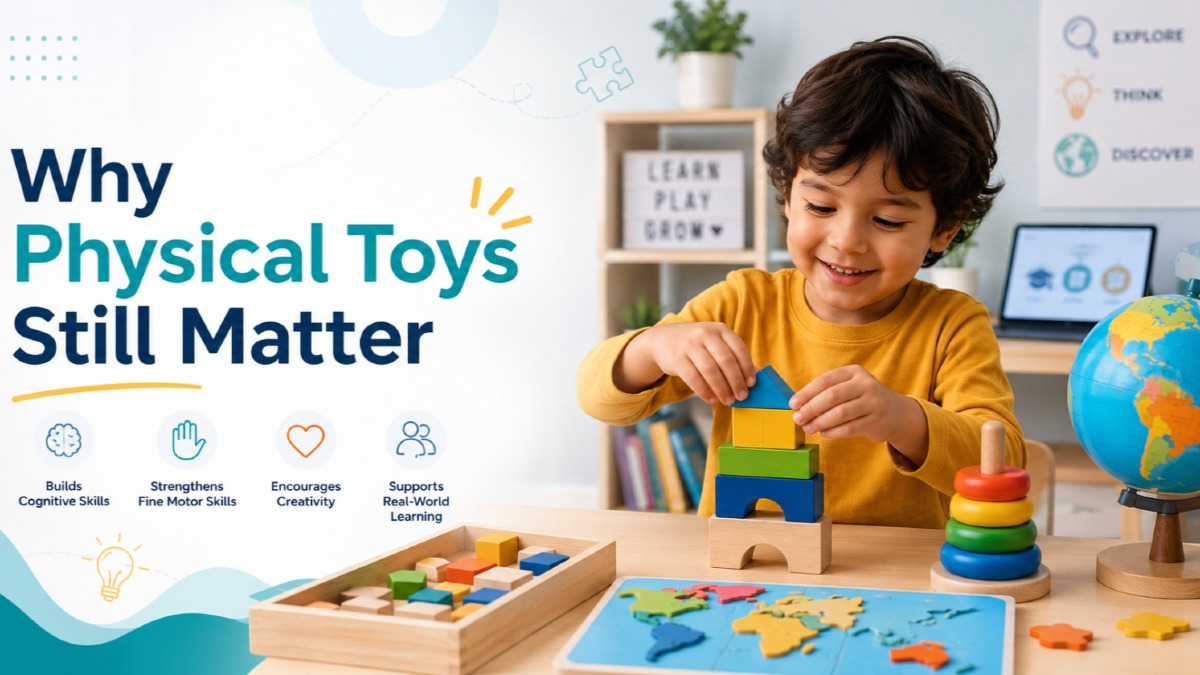
Because the research is clear: physical, tactile play develops skills that screens simply cannot replicate.
The Neuroscience of Touch
When a child holds, manipulates, and explores a physical object, their brain fires up differently than when tapping glass. Tactile interaction engages the somatosensory cortex, strengthens fine motor skills, and builds spatial reasoning in ways that purely visual/digital experiences don't.
Physical + Digital = The Sweet Spot
The best approach isn't physical or digital — it's both. Products that combine a physical toy with a digital AR experience give kids the tactile benefits of real-world play plus the engagement of technology.
For example, the Eduarise AR World Map is a real, printed poster that kids can touch, pin, and hang on their wall. But when they scan it with a phone, countries pop to life in 3D. It's physical-first, digitally-enhanced.
The Attention Factor
Physical toys naturally encourage longer attention spans. A child building with blocks or exploring a map with their hands stays focused because the interaction is self-directed and open-ended. Apps, by contrast, often rely on notifications and rapid rewards that fragment attention.
What Parents Can Do
- Prioritize toys that encourage open-ended exploration over single-use digital games
- Look for hybrid products that blend physical and digital play
- Create toy rotation — fewer toys available means deeper engagement with each
- Join your child in play — your involvement makes any toy more educational
The Takeaway
Screens are powerful tools, but they're most effective when they enhance real-world experiences — not replace them. The toys your child holds in their hands still matter enormously. Choose ones that bridge both worlds.